
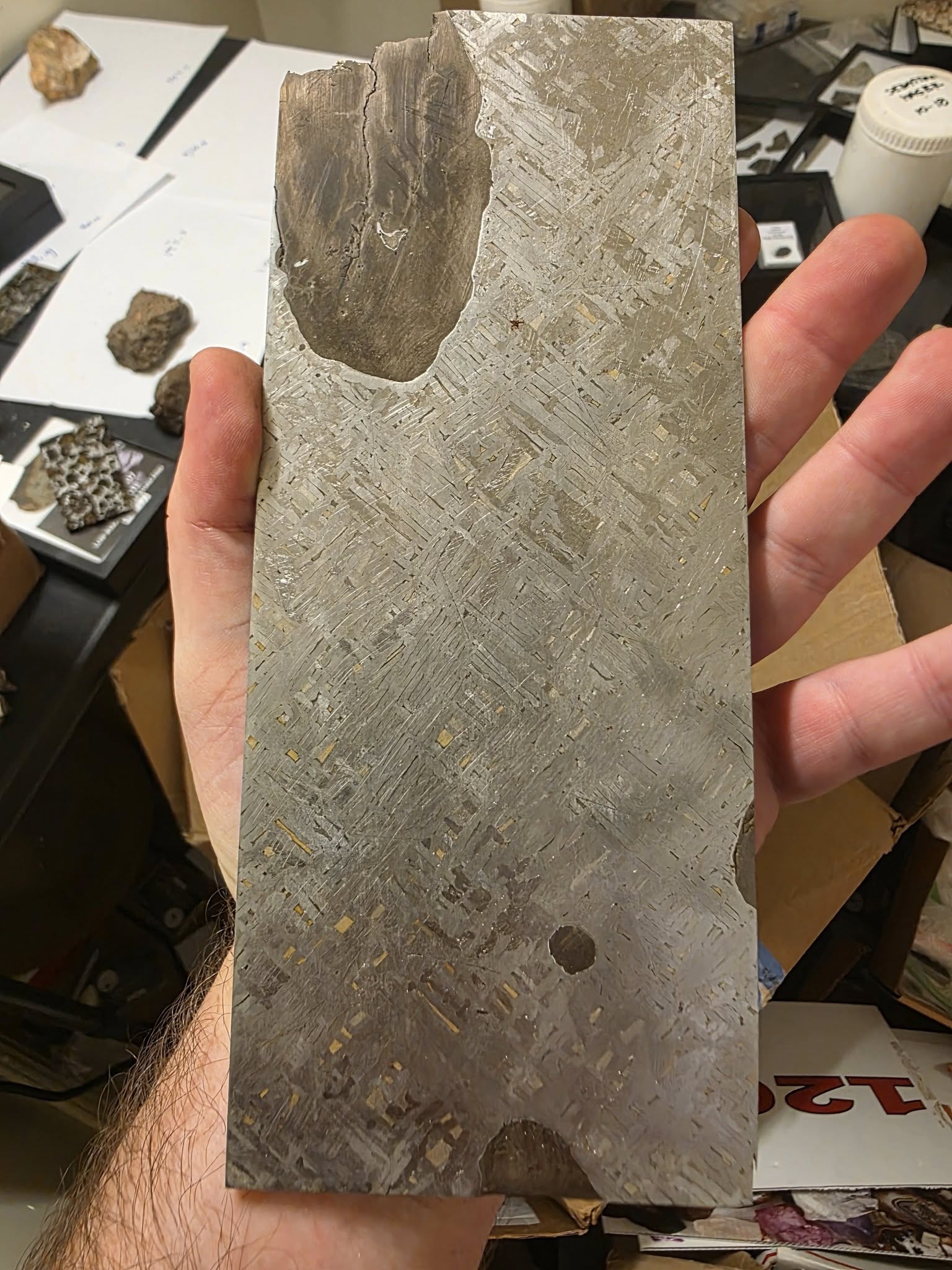
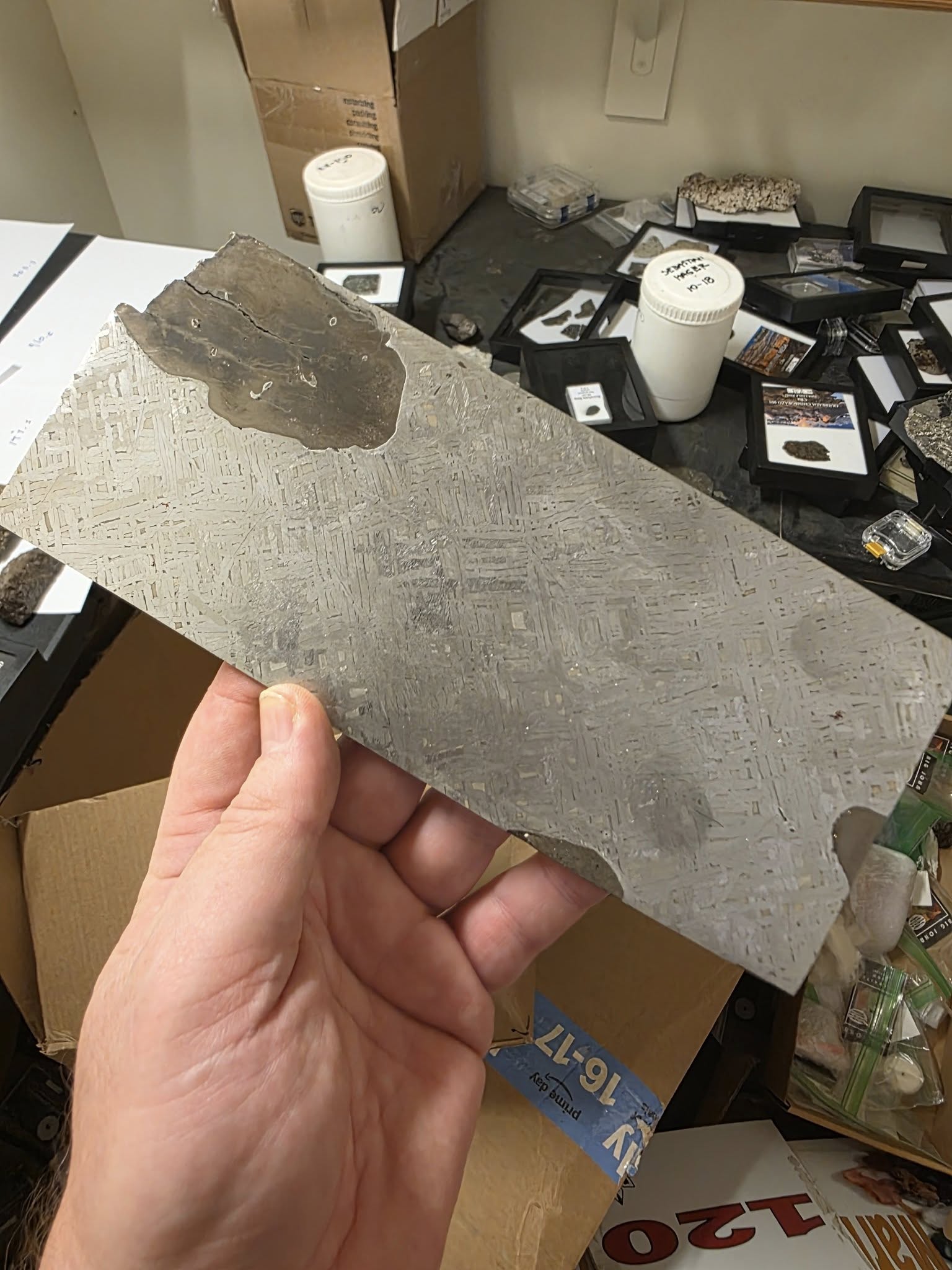
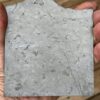
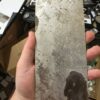
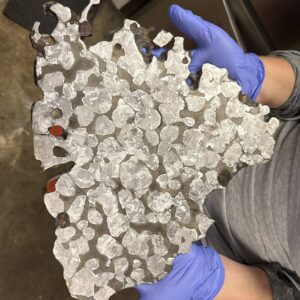
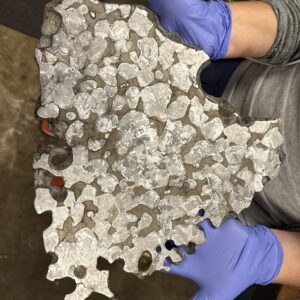
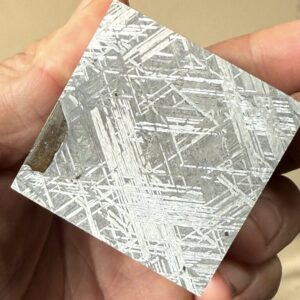
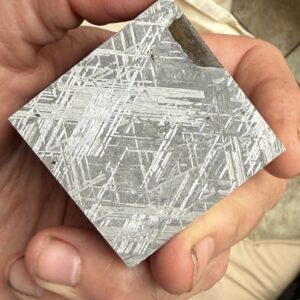
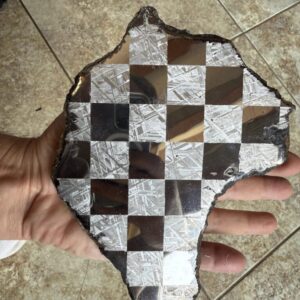
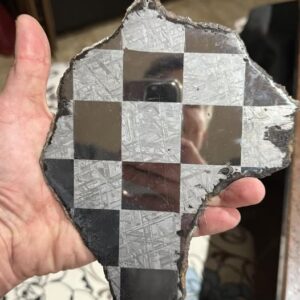
256g Cape York Meteorite Part Slice – Dual-Sided Natural Etch with Large Troilite Inclusions
Own a rare and historic piece of space — this 256-gram Cape York meteorite part slice is an exceptional specimen from one of the most famous iron meteorite falls in the world. Originally discovered in Greenland and used by Inuit peoples for centuries, Cape York meteorites are steeped in both scientific and cultural significance.
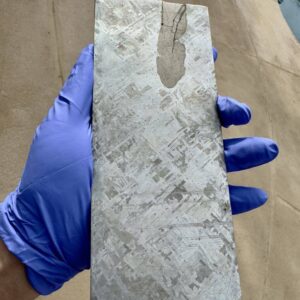
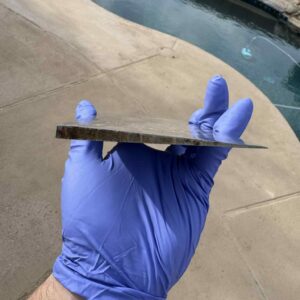
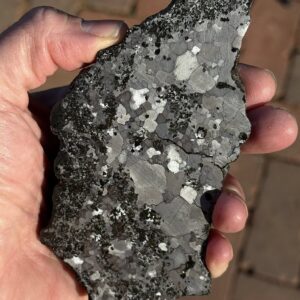
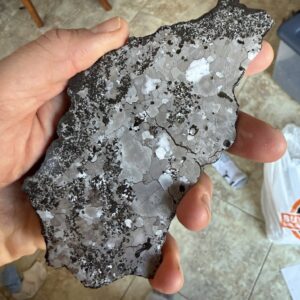
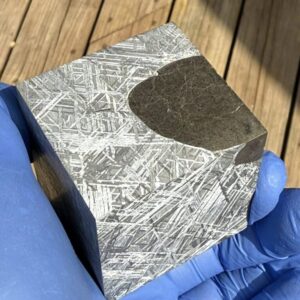
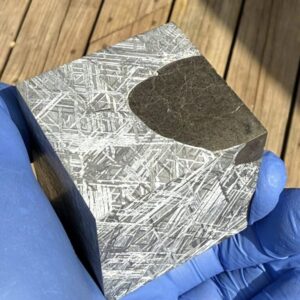
This Cape York Meteorite Part Slice features a natural etch on both sides, revealing the unmistakable Widmanstätten pattern formed over millions of years as the metal cooled slowly in space. Unlike artificially etched meteorites, this slice’s surface is untouched by acid, showing the authentic, naturally weathered crystalline structure.
Adding to the rarity of this Cape York Meteorite Part Slice are multiple large troilite inclusions — visible iron sulfide nodules that offer a dramatic contrast against the metallic iron-nickel matrix. These inclusions not only enhance its aesthetic appeal but also serve as clear indicators of its extraterrestrial origin.
The Cape York Iron meteorite was discovered by the Inuit in Greenland in the late 19th century and is estimated to be about 10,000 years old. The meteorite consists of several large masses that were known to the Inuit as saviksue, meaning “great iron.” Expeditions to find the source of the iron were launched between 1818 and 1883 by Britain, Sweden, and Denmark, all of which failed. However, in 1894 a Western explorer, Robert E. Peary of the U.S. Navy, finally reached the meteorite in Saviksoah Island with the help of a local Inuit guide. Peary spent three years planning and executing the removal of the giant meteorite, which included the building of a short railroad. His removal of the meteorite and treatment of the Inuit garnered criticism; nonetheless, he sold the two pieces to the American Museum of Natural History in New York City for $40,000 (equivalent to nearly $1.5 million in 2024).
Ahnighito, the second-heaviest meteorite to have been relocated, is so heavy that it was necessary to build a display stand with supports that reached directly into the bedrock below the museum.
Made mostly of iron, nickel and cobalt, Cape York Iron Meteorite was used as a source of iron to forge tools and weapons. In 1897, the American Museum of Natural History purchased the meteorite from the Inuit people and transported it to New York in the United States. The meteorite was subsequently cut into several large pieces, some of which are on display at the American Museum of Natural History, while others are housed in museums and private
collections around the world.
Whether you’re a seasoned meteorite collector, a science educator, or simply fascinated by the cosmos, this Cape York part slice is a museum-quality specimen with both visual impact and historic depth. Large slices like this — especially the Cape York Meteorite Part Slice natural etching and prominent troilite inclusions — are increasingly hard to find.
Don’t miss this opportunity to add a rare and iconic space rock to your collection.
Be the first to review “Buy 256g Cape York Meteorite Part Slice”
Related products
Iron Meteorites
Iron Meteorites
Iron Meteorites
Iron Meteorites
Iron Meteorites
Iron Meteorites
Iron Meteorites
Iron Meteorites
Reviews
There are no reviews yet.